
Disclosure: PawCruvia is a participant in the Amazon Services LLC Associates Program. If you buy through a link on this page we may earn a small commission at no extra cost to you. We only describe what sources say, and we have not tested these products ourselves.
Most of us clip our dogs in the way we would buckle in a kid, quickly and without much thought. The uncomfortable part is that “crash tested” on a harness box does not always mean much. This guide explains what to look for in a dog car harness, what independent testing has found, and how to fit and use one properly.
Quick answer
- Look for independent crash-test certification, not just the words “crash tested” on the packaging.
- The Center for Pet Safety (CPS) runs the best-known independent certification program in the US, and its certified harness list is short.
- Connect the harness to the seat belt system and keep your dog in the back seat.
- Fit matters as much as the brand. A loose harness lets the dog slide and shift.
Why a dog car harness matters
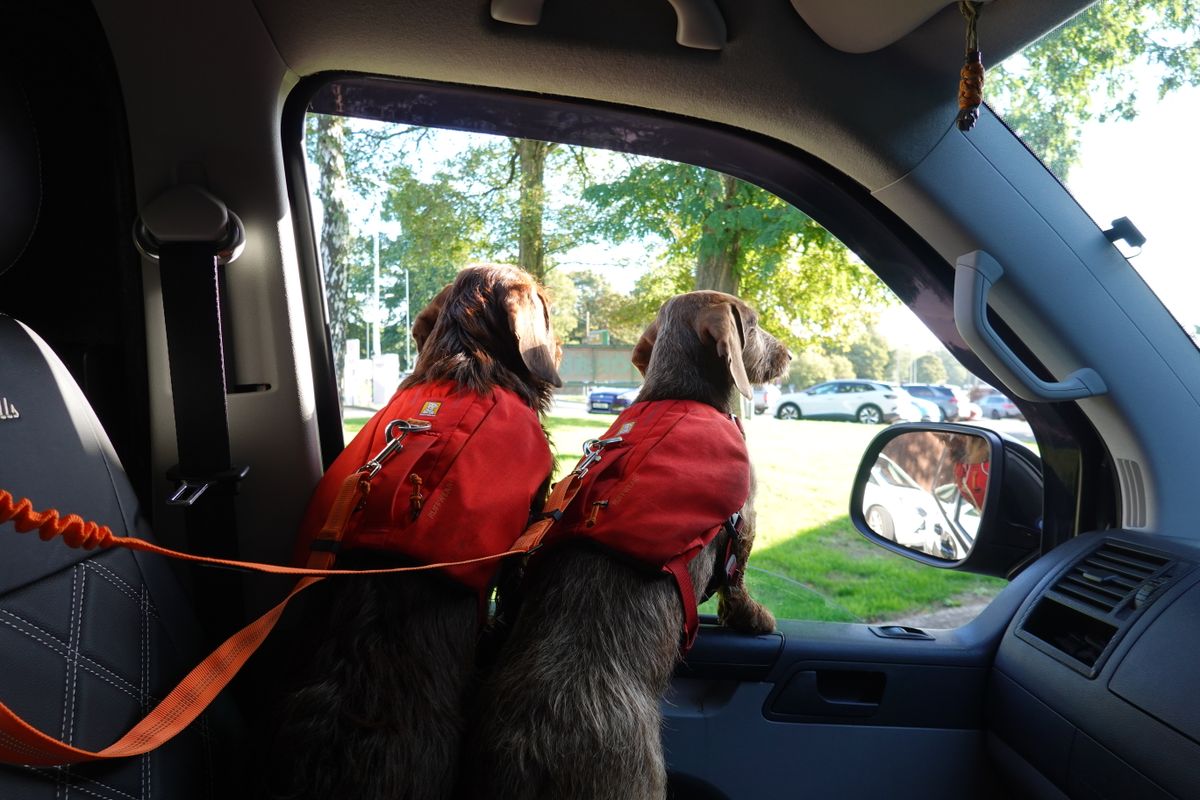
A loose dog in a car is a risk to the dog and to everyone else. In a sudden stop, an unrestrained dog becomes a projectile. Before any crash happens, it can also become a distraction. A Volvo study, as reported by HowStuffWorks, found that hazardous driving behaviors more than doubled when dogs were unrestrained compared with restrained. Pediatric injury researchers at CHOP compare an unrestrained pet to another well-known distraction: texting while driving.
Despite that, restraint use is low. A Progressive survey found only 17% of respondents use a seat belt harness and 27% use a pet carrier.
What independent crash tests have found
There is no government safety standard for pet harnesses, unlike child seats. The Center for Pet Safety, a nonprofit founded in 2011, filled the gap. In its 2013 harness study, funded by Subaru of America, CPS looked at 11 harness brands that made some kind of safety claim. Only 7 of them made it to the crash test, and 4 of those 7 had a catastrophic failure in at least one size. Vetstreet reported that just one harness, the Sleepypod Clickit Utility, passed.
Since then, CPS has run a certification program. At the time of writing, the CPS certified list shows the Sleepypod Clickit range in the harness category, and CPS has revoked certification for at least one other harness for breaking its contract terms. Check the CPS certified products page for the current list before you buy, since it changes.
That does not mean every other harness is dangerous. It means they have not been independently verified under that program. Some brands say they test at facilities such as Calspan or at university labs. Treat those as the manufacturer’s claims and look for the test method and results.
How to choose a dog car harness
| What to check | Why it matters |
|---|---|
| Independent certification | Look for third-party testing such as CPS, and a named test method, rather than “crash tested” alone. |
| Size range and weight limit | CPS noted failures in specific sizes, so check the rating for your dog’s size and weight. |
| Seat belt connection | The harness should connect to the car’s seat belt or a secure anchor, not just a clip on a loose tether. |
| Padding and chest plate | A wide, padded chest plate spreads force and is more comfortable on long drives. |
| Adjustability | You need several adjustment points to get a snug fit on deep-chested or fluffy dogs. |
Harness options to look at
These are starting points based on what sources say. We have not tested them, so check current specs and sizing on the product page before buying.
Sleepypod Clickit harnesses
The Sleepypod Clickit range is the harness line that appears on the CPS certified list. One retail roundup says the Clickit Sport is rated for dogs up to 110 pounds, but confirm the size chart for your dog. Check Sleepypod Clickit harnesses on Amazon.
Kurgo car harnesses
Kurgo makes several harnesses. A Dogster roundup says the Tru-Fit Enhanced Strength was tested at a university facility and the Impact at Calspan. CPS’s own page noted in 2018 that Kurgo redesigned its harness after the 2013 study and that CPS had not retested it. Some Kurgo listings are also clear that they are everyday harnesses, not crash-tested ones, so read each listing. See Kurgo car harnesses on Amazon.
CarSafe crash-tested harness
Dogster reports that CarSafe says its back-clip harness was tested at an Office of Vehicle Safety Compliance facility. It is a manufacturer claim, not CPS certification. Look at CarSafe on Amazon.
How to fit and use a car harness
- Measure your dog’s chest at the widest point, and use the brand’s size chart rather than guessing from weight alone.
- Put the harness on and adjust so you can slide two fingers under the straps, with the chest plate on the breastbone.
- Seat your dog in the back seat and connect the harness to the seat belt system as the instructions say.
- Check that your dog can sit and lie down but cannot slide from side to side. CPS founder Lindsey Wolko has made that point about movement.
- Skip add-on extension tethers unless the maker allows them. Wolko has warned they can be no better than being unrestrained.
- Re-check the fit before every trip, especially if your dog’s coat or weight has changed.
If your dog also sheds or gets muddy, pair the harness with a seat protector. Our guide to choosing a dog car seat cover covers that.
What about the law?
No federal law requires dogs to be restrained in a vehicle. State rules vary. Hawaii bars drivers from having an animal in their lap, and some states have restraint requirements or apply distracted-driving laws to loose pets. These rules change, so check the current law for each state on your route.
Frequently asked questions
Is a dog car harness safer than a regular walking harness?
A walking harness is built for leash pulls, not for the forces of a crash, and there is no government standard that defines what a pet car harness must withstand. That is why independent crash testing matters. If a product does not say who tested it and how, treat the safety claim as marketing.
Does my dog have to wear a harness in the car?
No federal law requires it. Some states have restraint rules or apply distracted-driving laws to loose pets, and Hawaii bars drivers from holding an animal in their lap. Rules differ by state and change, so check the transport laws of every state on your route.
Where is the safest place for a dog harness in the car?
The back seat is the usual recommendation, since a front passenger airbag can injure a dog. Attach the harness to the seat belt system, keep the dog seated or lying down, and avoid letting the dog ride in the driver’s lap.
Should I use the extension tether that came with my harness?
Be careful with it. Center for Pet Safety founder Lindsey Wolko has warned that extension tethers can be no better than no restraint in a crash. Where a harness allows it, connect it straight through the seat belt instead.
How should a car harness fit?
Snug enough that you can slip two fingers under the straps, with the chest plate sitting on the breastbone and nothing rubbing behind the front legs. Your dog should be able to sit and lie down but not slide side to side on the seat.
Is a crate or a harness better for the car?
Both can work if they are well made and used correctly. A crash-tested harness takes less space and suits dogs that ride on the seat; a secured crate suits dogs that settle better in an enclosed space. We cover crates in a separate guide.
Planning a longer drive? Read our guides to a dog crate for the car and how to travel with a dog in a car.
Sources
- Center for Pet Safety, certified products page and 2013 harness study pages (centerforpetsafety.org)
- Vetstreet, “Study: Many dog harnesses for cars are unsafe”
- Quick and Dirty Tips, independent car harness safety tests
- HowStuffWorks, “Dogs need to wear seat belts, too” (Volvo study)
- Progressive, survey on driving safely with pets
- CHOP Research Institute, “Dogs and driving: reasons to restrain pets in cars”
- WJLA, “Dogs in cars: the trouble with big dogs”
- Dogster, best crash-tested dog harnesses
- Edmunds and Kinship, dog seat belt laws overview
Last updated: November 21, 2026. We update this guide when the CPS certified list or laws change.
Leave a Reply